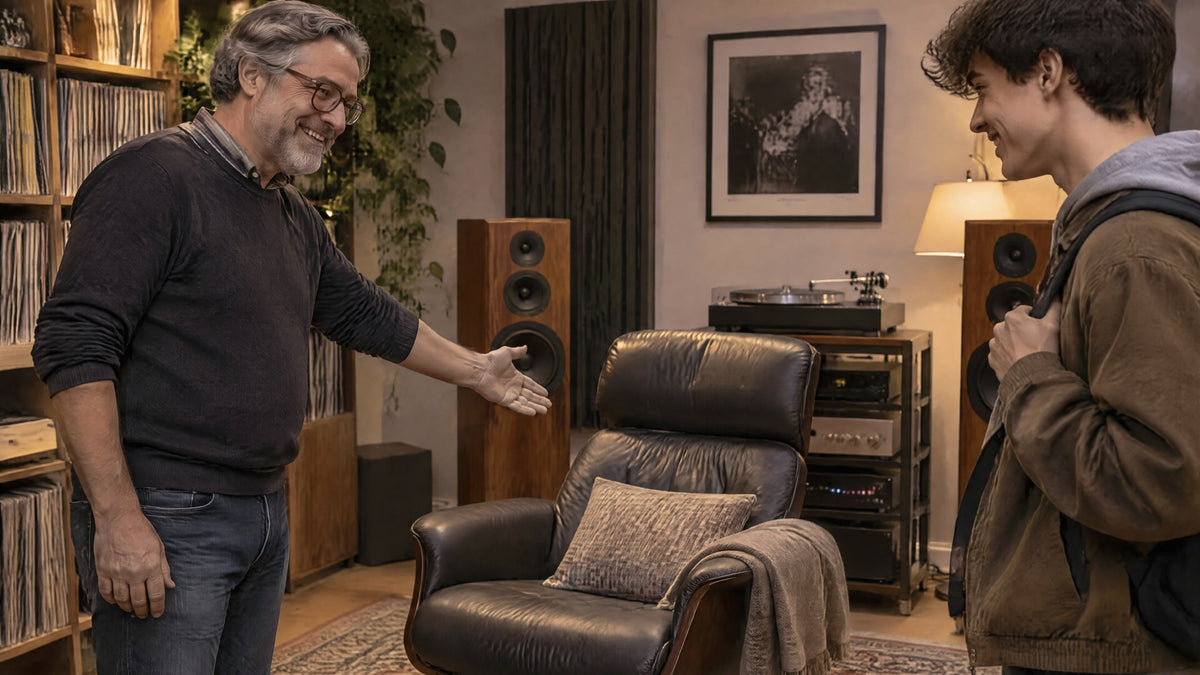
Dad didn’t just have a stereo. The stereo lived with us.
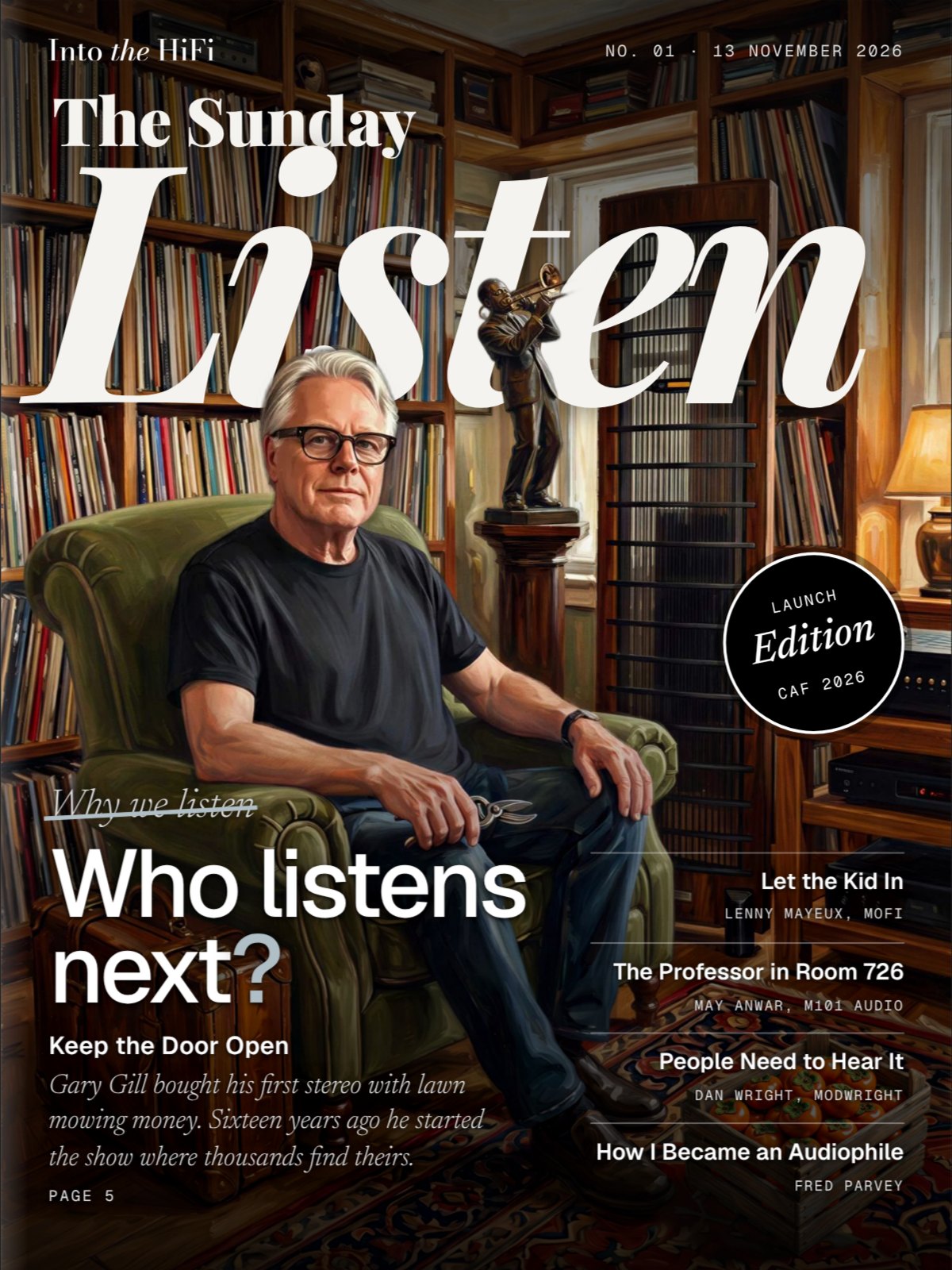
Letter from the Editor, The Sunday Listen issue one: where hi-fi sits, and why we built a place for everyone in the conversation.
Written for The Sunday Listen · No. 01 By David Parvey
Co-founder, Founding Editor

It wasn’t furniture stashed in a corner, the kind you forget about until you need it. The stereo waited for us like a puppy. In our house, hi-fi was part of the family.
Back then, the stereo was the center of the home. Today, music plays from everywhere: earbuds, smart speakers, car audio, pocket-sized Bluetooth boomboxes. So where does hi-fi sit now, as an industry? Do we take our place for granted? Do we need to look inward, or are we doing just fine?
There are good signs. In the first half of this year, U.S. vinyl sales grew 17.7% and CD sales jumped 58.6%, according to the RIAA. Hi-fi shops are still selling, and new ones are opening. People still want to sit down and really listen.
Still, numbers only tell part of the story. I think our place comes down to what that stereo was in our house. My dad, Fred, and I started Into The HiFi to give voice to the culture of hi-fi listening and the people who make it. Specs matter, and Fred reads them religiously. But there’s also community, family, and a listening space that welcomes you and suits you. Hi-fi is about what all of it makes together: the space, the people, and of course the music.
I’ve heard it argued that music is the ultimate vehicle for human expression. If that’s true, then a listening room is an art gallery that never closes and shows the art of your choosing. Even the most devoted art lovers rarely spend half an hour in front of a single painting. By contrast, listeners spend hours taking in the intent of musicians whose work is pressed into the grooves of a record.
At its heart, music is a conversation between artists and listeners. What fascinates me about hi-fi is that the conversation doesn’t end when the record slides into its sleeve. Designers and makers join in, in a way the art world can’t match.
Owning an album is like having the Mona Lisa on your living room wall. Not a copy, but the real thing. Now imagine a voice behind it whispering how it was painted, so you can feel the brush move across the canvas. Maybe it even shows you something no one has seen before. That voice is the amp maker, the speaker designer, the engineer behind the streamer. Then there’s the distributor and the shop owner who led you to this new language, and the magazines and reviewers who helped you understand it.
So where does hi-fi sit? Right in the middle of that conversation. That’s why we built Into The HiFi as a place for everyone in it to speak: the brands, shops, designers, engineers and distributors, and the magazines and reviewers too. Here they can all publish in their own words, directly to each other and to music lovers who may or may not know anything about them. And the music lovers can talk back. Everyone is invited in. We want to open the door to the proverbial listening room.
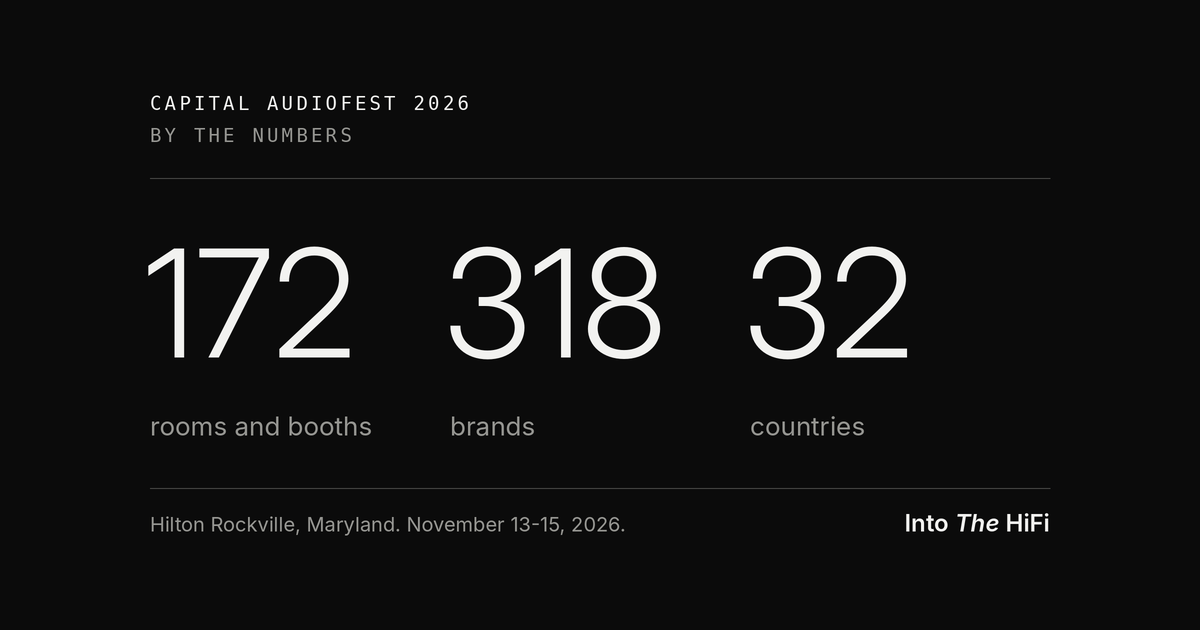
There’s no better place to open that door than Capital Audiofest. Many consider it the best show in the U.S., and that’s no coincidence. Gary Gill builds family and community into every part of it.
That sense of welcome is where we in the hi-fi industry still have work to do, and it runs through this issue. Our writers ask how we make room for newcomers, and how we make an industry feel open when it can seem like you need to read the manual first, before you walk into a hotel room and talk to an exhibitor.
Lenny Mayeux makes the case for newcomers in “Let the Kid In.” In “The Professor in Room 726,” we visit a room at this show that is handing kids a passport to listening. In “People Need to Hear It,” Dan Wright looks at why the next generation isn’t finding hi-fi, and what needs to change. Fred shares how he became an audiophile. And in “Keep the Door Open,” Fred and I sit down with Gary himself.
Whatever the numbers say, one thing is certain: there is no shortage of passion for music in this world, or of the desire to connect with the artists we love. Hearing a song on a hi-fi system can transform you, transport you, and awaken something deep inside you. Doesn’t everyone deserve that? So this issue asks: are we waiting for the uninitiated to find us, or are we taking the gospel to them?
Welcome to the first issue of The Sunday Listen.

David Parvey Co-founder, Founding Editor
It wasn’t furniture stashed in a corner, the kind you forget about until you need it. The stereo waited for us like a puppy. In our house, hi-fi was part of the family.
Back then, the stereo was the center of the home. Today, music plays from everywhere: earbuds, smart speakers, car audio, pocket-sized Bluetooth boomboxes. So where does hi-fi sit now, as an industry? Do we take our place for granted? Do we need to look inward, or are we doing just fine?
There are good signs. In the first half of this year, U.S. vinyl sales grew 17.7% and CD sales jumped 58.6%, according to the RIAA. Hi-fi shops are still selling, and new ones are opening. People still want to sit down and really listen.
Still, numbers only tell part of the story. I think our place comes down to what that stereo was in our house. My dad, Fred, and I started Into The HiFi to give voice to the culture of hi-fi listening and the people who make it. Specs matter, and Fred reads them religiously. But there’s also community, family, and a listening space that welcomes you and suits you. Hi-fi is about what all of it makes together: the space, the people, and of course the music.
This is the opening of the letter. The full version runs 4 minutes.