Keep the Door Open
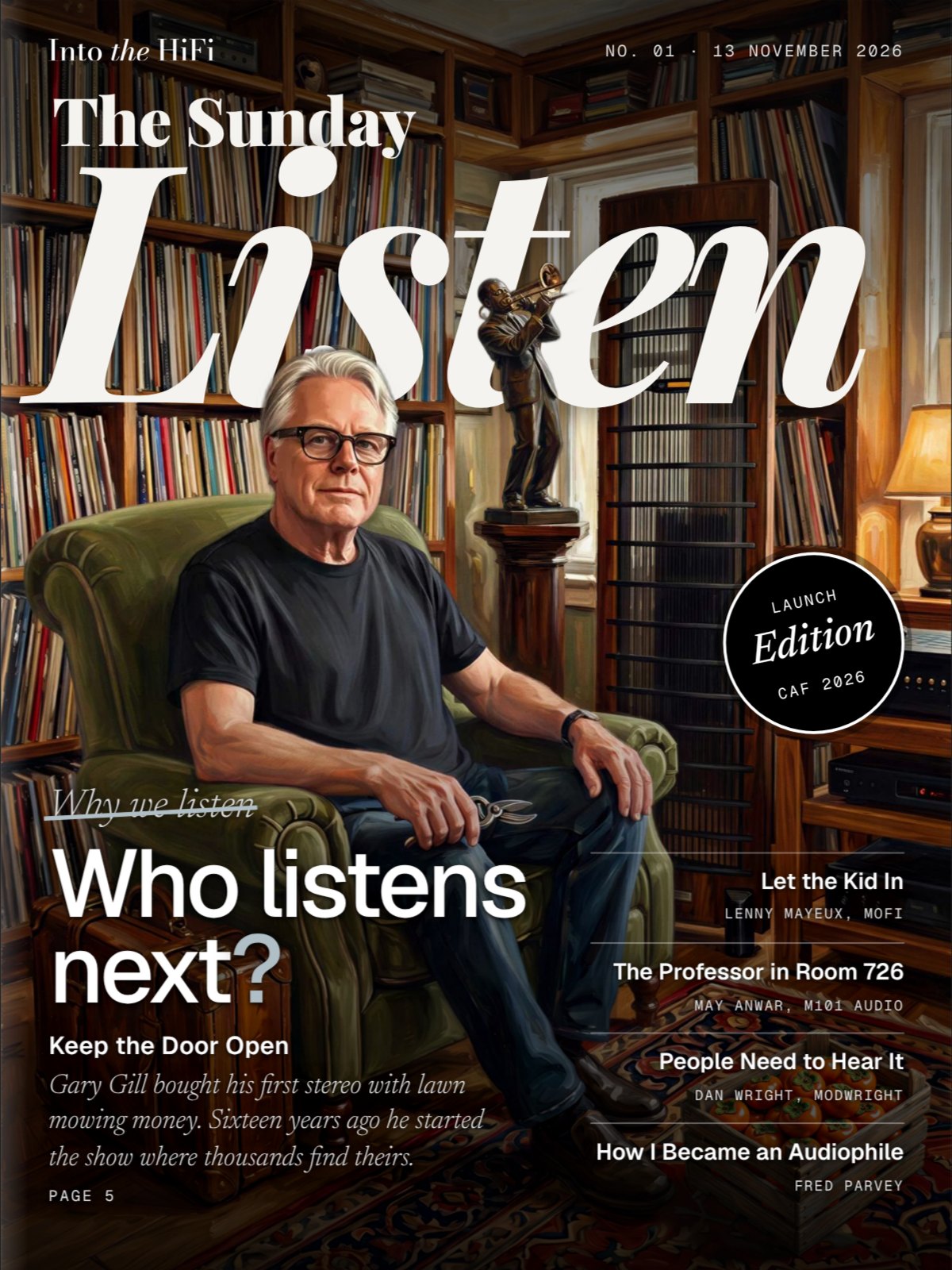
Gary Gill bought his first stereo with lawn mowing money. Sixteen years ago he started the show where thousands find theirs.
Written for The Sunday Listen · No. 01
The idea started the way a lot of good ideas do: late, with cigars and a few drinks.
About twenty years ago, a group of Washington area audiophiles gathered at a friend's house in Silver Spring. Gary calls the place "the experimental station": tonearms on the bench, vintage Quad electrostatics in various stages of rebuild, and a room full of people who wind their own transformers and build their own cartridges.
The talk turned, as it does, to the old days, when DC had its own audio show downtown back in the 1980s. Someone should bring it back.
"Everybody said yeah, yeah, yeah, we'll do it. We'll help you," Gary remembers. "And of course nobody helped. I started it on my own."
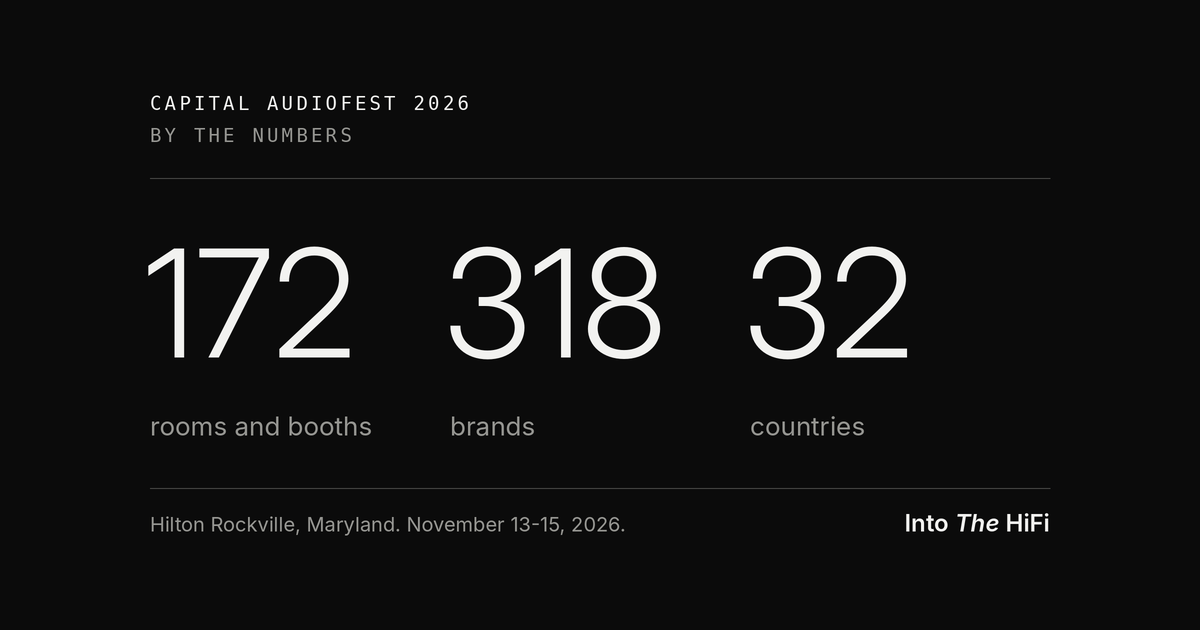
That was sixteen years ago. With one year lost to COVID, this November marks the fifteenth Capital Audiofest. It has grown from about a dozen rooms to nearly 130, and it has become, in the eyes of many exhibitors and regulars, one of the friendliest shows in the country.
To understand why, you have to go back further than the cigars.
Lawn Mowing Money
Gary bought his first real system with money from mowing lawns: a Harman Kardon receiver and a pair of JBL 4311s.
"That was magical to me," he says. His parents were less enchanted. The family listened to AM radio in the car, and that was about it. "They were like, what the heck are you doing? Why are you spending all your money on stereo equipment?"
He didn't care. "I had my system, and I hung out at home, and I had friends over. It became part of my lifestyle at an early age. It was good for me."
The other half of his ear came from the trombone. Gary played for years, in band and later out in various groups, and during those years he barely listened to a stereo at all. He didn't need to. "Real live music truly sounds better than reproduced music, on whatever system you have," he says. What he tried to do instead was carry that sound home and hold his system to it.
That search has taken him through vintage tubes and horns and on to what he lives with now: big electrostatic speakers driven by tube amplifiers from Linear Tube Audio, a Maryland maker that uses Gary as something of a test bench. He counts David Berning, the designer behind LTA's ZOTL circuits, as a good friend.
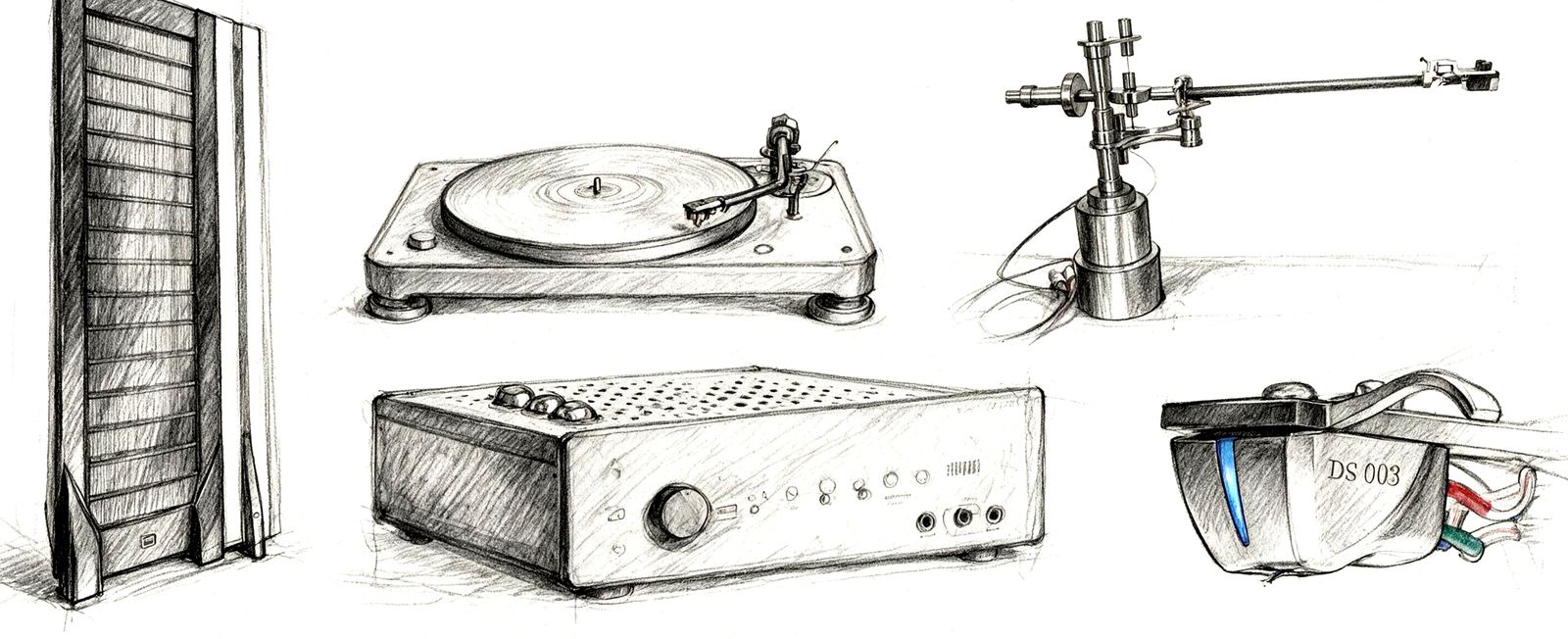
The room around it is lived in, not treated to death. Over 10,000 records. Art on the walls. Asian carpets and big overstuffed furniture. "A relatively live sound," he says. And patience. When he first set up the electrostatics close to the wall, the bass swelled and the room took over. He pulled them out a few inches at a time, over a long stretch, until they sat five or six feet from the rear wall. "Then finally the bass was where I wanted it, and the image was where I wanted it. But it took time."
Twelve Rooms in a Mansion
The first Capital Audiofest opened in June 2010 at Glenview Mansion in Rockville, a mid-1800s house owned by the city and used as an art gallery. Gary didn't know what he was doing, he says, but it was a cool venue. The city left nearly all the art on the walls. The wooden floors creaked. The walls were heavy. There was plenty of parking.
And it was a Maryland summer. "It was scorching hot, and their air conditioning did not keep up." It was part show, part swap meet: a dozen or so rooms, people selling gear and records, live music, everything informal. Room signs went up with blue painter's tape. "I'm like, maybe that doesn't look as good as it should," he laughs.
He had no industry contacts. He cold-called companies out of the pages of magazines. Most said no, not out of rudeness, he says, but because nobody knew who he was. A handful of local and regional people took the chance and have come back every year since: Greg Beron of United Home Audio, Gary Dews of BorderPatrol, Jeff Fox of Command Performance AV, and Jeff Catalano of High Water Sound. The first sign it could work came that first weekend, when Gary Dews sold a couple of amplifiers. The second came when the phone started ringing. "People started calling me, and I was like, wow. I think we've got something."
Then came the long, slow part. Gary went to retailers. He went to other people's shows, including AXPONA and the Rocky Mountain Audio Fest. Marjorie Baumert of Rocky Mountain took him under her wing; he still talks with her. So did Richard Beers of T.H.E. Show, before he passed. "They were very helpful, and they passed me along to other people. There was a lot of camaraderie, and I truly appreciate their help." The show moved to a hotel, then to bigger ones, and settled at the Hilton Rockville in 2015. Twelve rooms became about two dozen, then thirty-some, then fifty, where it held for several years. "And then it just kind of exploded."
Gary credits two things. The location works for most of the East Coast. And he was never in it for the money. He had a day job in construction management. "If I was breaking even, I was good with it," he says. "I just did it for fun. And I think that right there allowed me to continue."
Suits and Swap Meets
Growth meant choices. Around 2018 the show began phasing out the DIY rooms that had been part of its DNA. Gary still loves DIY, and still does some himself, but he says it no longer fit. Too often it drifted toward a flea market, sitting next to retailers, importers and distributors who had come in suits to represent their businesses. "It was difficult to mix them together," he says. Nobody fought it.
What replaced the swap meet was something more deliberate, and in some ways more welcoming.
Bring the Kids
Exhibitors and press have a habit of using words like family and loyalty about Capital Audiofest. Part of that, Gary admits, is just him. But part of it is work.
Every year, Omega Studios, a recording school in Rockville, brings about thirty students and staff. The students tell their parents, and the parents come too. Gary works with local papers and with WPFW, the DC radio station, and keeps knocking on doors at local universities, though he misses the days when a campus newspaper reached everyone. He has around twenty headphone vendors, and rather than corral them into one hall, he spreads them through the hotel in groups and in their own spaces. Vinyl, which younger listeners are discovering on their own, runs through the whole show.
He also wants the price tags to reach down. He points to exhibitors bringing starter turntables around $400, and all-in-one integrated amplifiers with a DAC and streamer built in for a couple thousand dollars. "There are all these different people that try to bring in that gateway system," he says.
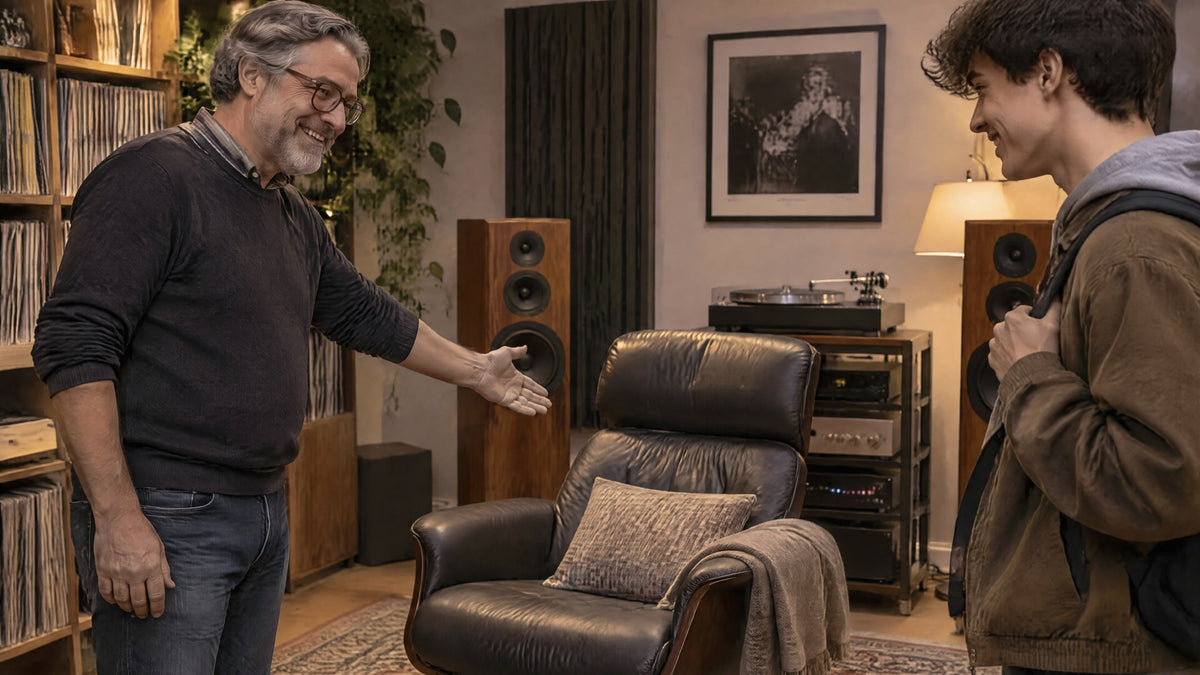
Some of the best outreach happens without him. This year May of M101 Audio approached him with her "Passport to Sound," a listening booklet for kids touring the show. He hadn't known it was coming. "I said, wow, that's a great idea," he says. She is an educator, and so is Daniela of AGD, another exhibitor he mentions. (It is the same spirit behind Lenny Mayeux's "Let the Kid In," elsewhere in this issue.) He can't track it, but he can see it. "I think I have a pretty darn good percentage of younger people, and they keep coming back," he says. "It's primarily headphones and vinyl. But hey, it's a start."
Here is the irony. The man who has filled a hotel with some of the best sound on the East Coast almost never gets to sit down and hear it.
"Rarely," he says.
What he does instead was his wife's idea. "She says, you need to go to every door." So he does. Every room, every weekend, a handshake and a thank you. "I can't just go put out fires all weekend. The vendors are the ones who make the event."
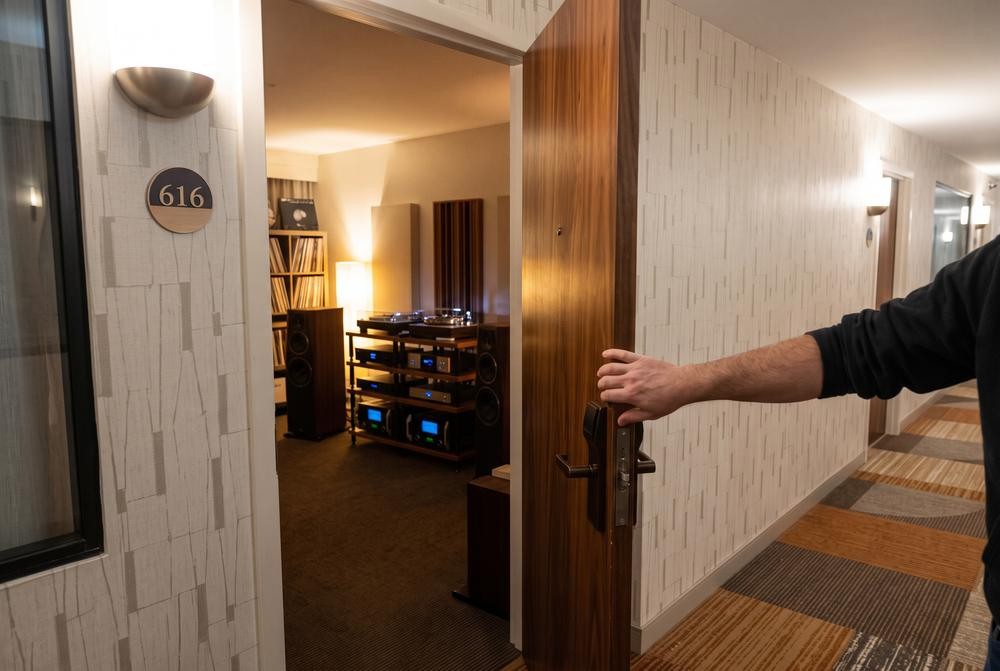
And he stays for a song. "It's kind of rude just to go shake hands and leave. To listen to a cut in a room is a good thing. It's like an acknowledgement to the vendor that they've done a good job."
So what plays at Gary's house the Monday after, when it finally goes quiet? He'll lie down on the sofa. He has been working through the ECM catalog, the jazz label he loves, with around 400 of its records on his shelves. But for the first week, he admits, it will probably be streaming, maybe a book, "trying to get my composure back."
Harder Roads In
Not everything is easy. Gary says a few past exhibitors are sitting out the show over tariffs, and Canadian companies now plan weeks ahead to get their gear across the border, which he calls "more awkward than it's ever been."
Open Late
Ask Gary what he wants the show to be remembered for, thirty years from now, and he laughs. "I'm gonna be dead!"
Then he answers. Capital Audiofest is a family affair in the literal sense: nieces and nephews handle the graphics and the website, and if you meet a lot of people named Gill over the weekend, they are all related. What he wants is what he sees every year: people smiling, people having a good time. You can buy a record in the atrium, walk into a room, and someone will play it for you. Bring a thumb drive and they'll play your track.
This year adds craft beer and spirits tastings, and somewhere between ten and fifteen after-hours parties. The website says the show closes at 6. It doesn't, really. "If there's people still in your room, you can stay open," Gary says. Other venues shut the doors. At the Hilton, the staff knows him, the insurance is in place, and the parties run late Friday and Saturday.
"That's what I want people to remember," he says. "It's not just a place to do business. It's a place to have a great time."
The hotel trusts him that much. Ask Gary for the one moment from sixteen years of shows he'll never forget, and it isn't a system or a record. It's the year the Hilton changed managers right before the show. The new manager told him, "You know this hotel better than I do, so you can manage the staff as well!" Gary, a construction manager by trade, said gladly. It all worked like a charm.
The business side has grown up too. The blue painter's tape is gone. There is a printer now, real signage, an 80-page show program, and a free photo booth that sends pictures to your phone. Gary keeps a list of 70 to 80 press and media contacts, from the big magazines to YouTubers and bloggers, and shares it with every exhibitor so they can set up interviews. Not every exhibitor makes a sale on the floor, he says. The point is that a week or a month later, something moves. "Those are things I've learned over time. I didn't know that the first Capital Audiofest."
Off the Clock
Away from the show, Gary has been to some forty countries. He mountain bikes. When we spoke he was looking out over his garden, a day after harvesting his persimmon trees. And he collects art, from bronze sculpture to original oils.
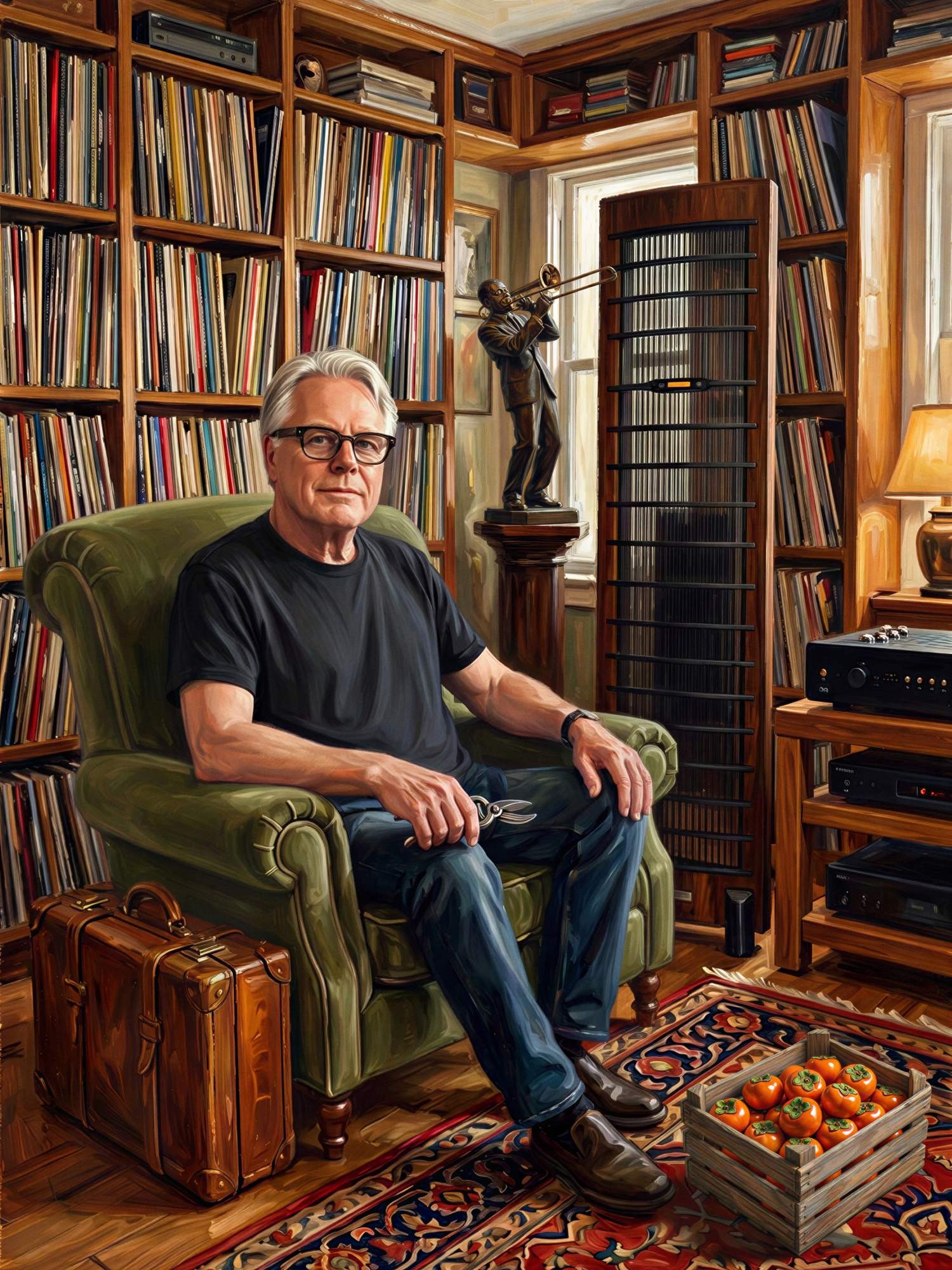
That last one, he says, isn't really separate from the music. "Listening to music is art. Musicians are artists, and they're in the same category, in my opinion, as a painter or a sculptor."
It may be the simplest answer to the question this issue asks. Why do we listen? For Gary Gill, for the same reason you hang a painting or plant a tree: because it makes a life better, and it is better shared.
The help he was promised that night in Silver Spring never came. It hardly matters now. These days, as he puts it, everybody helps. "Everybody's in this together, whether you're a retailer or an importer or the end user. Everybody's got to get along one way or the other."
The doors open Friday. He'll be knocking on every one of them, and staying for one song.
Capital Audiofest 2026 runs November 13 to 15 at the Hilton Rockville, 1750 Rockville Pike, Rockville, Maryland.
The idea started the way a lot of good ideas do: late, with cigars and a few drinks.
About twenty years ago, a group of Washington area audiophiles gathered at a friend's house in Silver Spring. Gary calls the place "the experimental station": tonearms on the bench, vintage Quad electrostatics in various stages of rebuild, and a room full of people who wind their own transformers and build their own cartridges.
The talk turned, as it does, to the old days, when DC had its own audio show downtown back in the 1980s. Someone should bring it back.
"Everybody said yeah, yeah, yeah, we'll do it. We'll help you," Gary remembers. "And of course nobody helped. I started it on my own."
That was sixteen years ago. With one year lost to COVID, this November marks the fifteenth Capital Audiofest. It has grown from about a dozen rooms to nearly 130, and it has become, in the eyes of many exhibitors and regulars, one of the friendliest shows in the country.
To understand why, you have to go back further than the cigars.
Lawn Mowing Money
Gary bought his first real system with money from mowing lawns: a Harman Kardon receiver and a pair of JBL 4311s.
"That was magical to me," he says. His parents were less enchanted. The family listened to AM radio in the car, and that was about it. "They were like, what the heck are you doing? Why are you spending all your money on stereo equipment?"
He didn't care. "I had my system, and I hung out at home, and I had friends over. It became part of my lifestyle at an early age. It was good for me."
The other half of his ear came from the trombone. Gary played for years, in band and later out in various groups, and during those years he barely listened to a stereo at all. He didn't need to. "Real live music truly sounds better than reproduced music, on whatever system you have," he says. What he tried to do instead was carry that sound home and hold his system to it.
That search has taken him through vintage tubes and horns and on to what he lives with now: big electrostatic speakers driven by tube amplifiers from Linear Tube Audio, a Maryland maker that uses Gary as something of a test bench. He counts David Berning, the designer behind LTA's ZOTL circuits, as a good friend.
The room around it is lived in, not treated to death. Over 10,000 records. Art on the walls. Asian carpets and big overstuffed furniture. "A relatively live sound," he says. And patience. When he first set up the electrostatics close to the wall, the bass swelled and the room took over. He pulled them out a few inches at a time, over a long stretch, until they sat five or six feet from the rear wall. "Then finally the bass was where I wanted it, and the image was where I wanted it. But it took time."
This is the opening of the story. The full version runs 9 minutes.