The Professor in Room 726
May felt like an outsider at her first hi-fi show. So she built a way in for the next person, and handed it to a child.
Written for The Sunday Listen · No. 01
At her first audio show, May Anwar felt like she didn’t belong.
It was the New York Audio Show in 2022, a small show with only a handful of rooms. That helped. She could take her time. But in every room, people were speaking a language she didn’t know. “Everybody was using those terms, and I did not understand what they were saying,” she told us. “I wanted to be a part of this community. I wanted to be like they are. But why does it have to be so complicated?”
So she learned her way in. Then she did what most of us never do once we’re past the gate. She turned around and built a door for whoever came next.
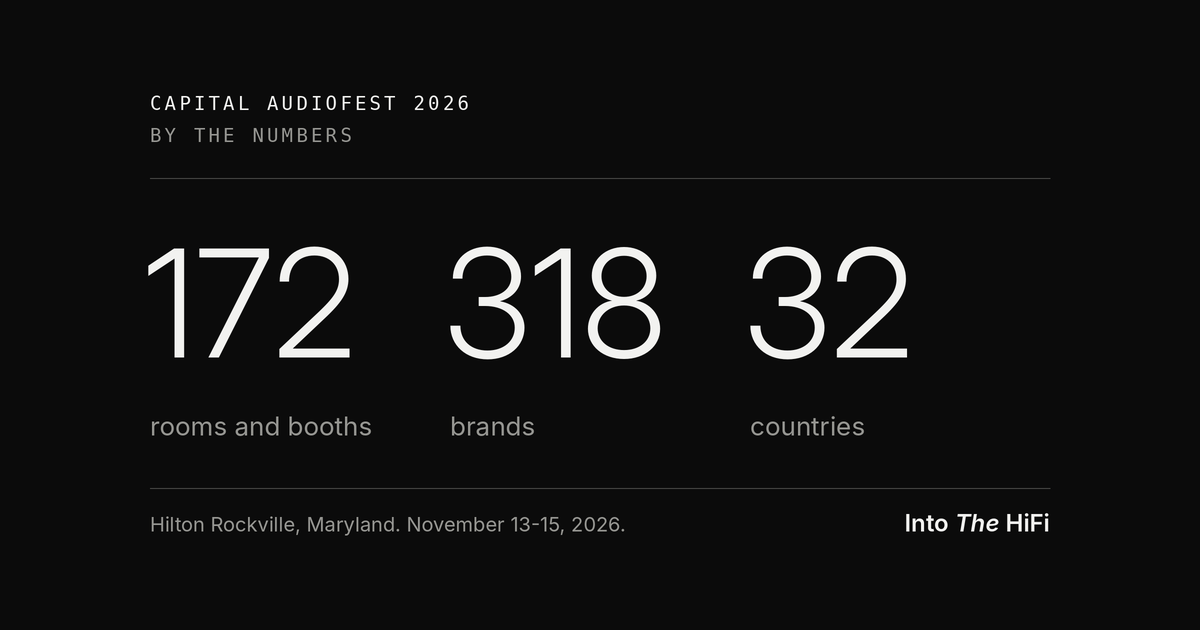
The door is a small booklet called Passport to Sound. This weekend at Capital Audiofest, it will be in the hands of children walking the hotel halls, stepping into rooms full of serious equipment and asking the people inside questions most adults never think to ask.
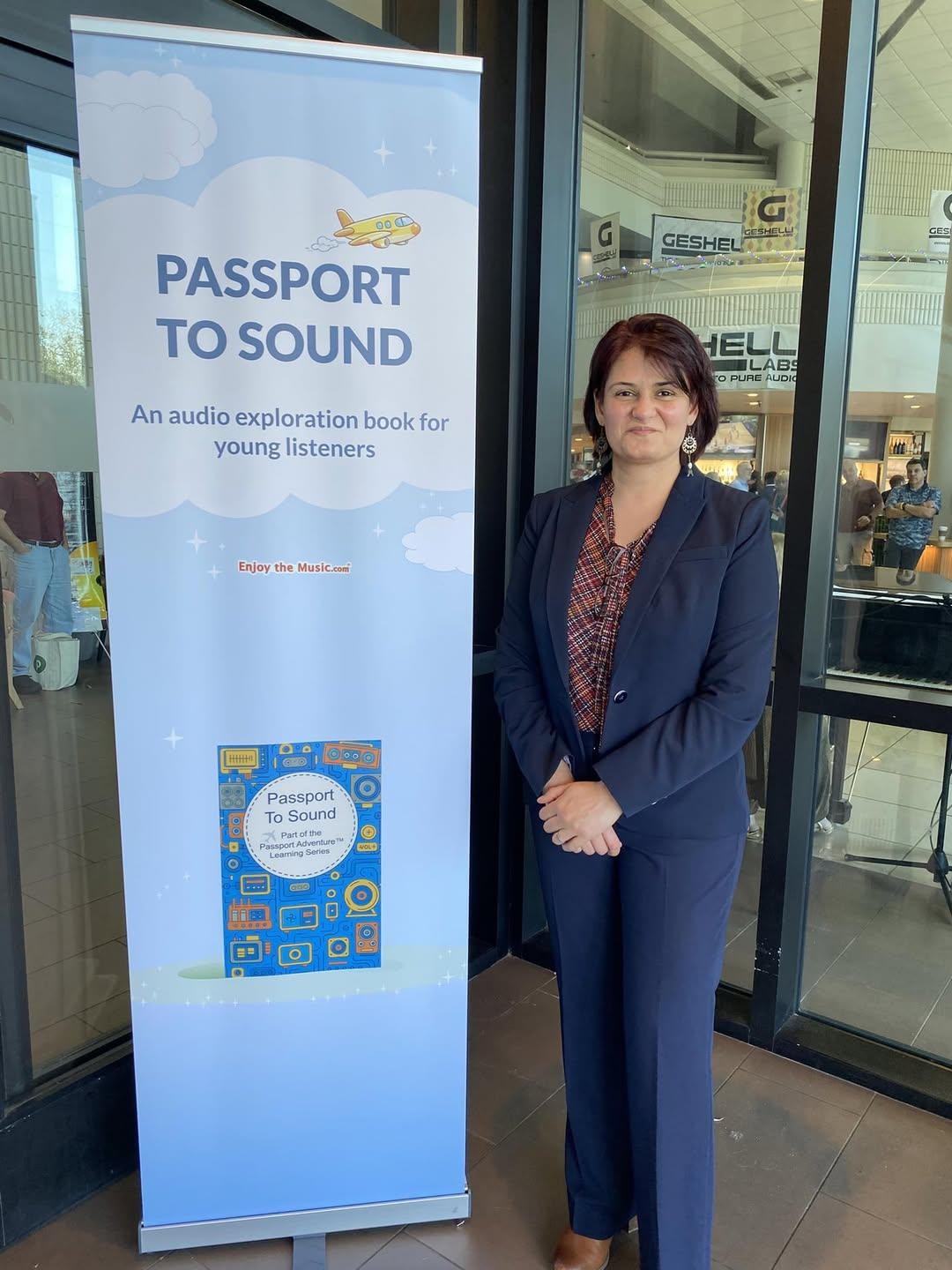
A geologist among the audiophiles
May is a geology professor at Bryant University in Rhode Island. She didn’t find hi-fi through a store or a magazine. She found it through her husband, who loves astronomy as much as he loves music. That’s why their company, M101 Audio, is named for a galaxy, the Pinwheel. When they met, he was just getting started, experimenting with how cables behave in an audio system. Today M101 makes cables and power isolators outside Boston, and brings the sculptural acoustic panels of the Czech company RDacoustic to the U.S.
May grew up in a house full of music. But somewhere along the way, convenience won, and she forgot what music was supposed to sound like. “I completely forgot about it,” she said. Her husband reminded her.
Her story isn’t unusual. In her view, that’s exactly the problem.
They’re listening. They just don’t know.
“I believe this generation is more into music than we were,” May said. “They have access to streaming. We didn’t have those things growing up. I see it in my students. They’re always listening to music.”
What they don’t know is that anything better exists. “They do not know that the sound they are listening to is a bad quality version, and there’s a better version out there.” She brings music into her own lectures. As students walk in and find their seats, she plays music they know. “It just changes the whole atmosphere,” she said. When the music stops, the room knows the lecture has begun. Students stay after class to ask what the track was, and she nudges them toward better-sounding streaming services. Last semester, one asked if she could help him get an internship in the audio industry. She recommended a company near Boston. “You never know who you’re going to inspire,” she said.
A passport, and a question for the exhibitor
The booklet works like a scavenger hunt. Children learn the main parts of a hi-fi system and what each one does, then use listening activities to hear how different systems play the same music. The new edition, made for this show, adds a section called Meet the Room Experts. It gives kids questions to ask. What’s special about your equipment? What’s one cool thing about high-end audio that most people don’t know? Can I request a song? (Only if the room isn’t too busy.) Those questions are aimed at the exhibitors as much as the kids. “It forces the exhibitor to think, why am I doing this? What made me love this? Why am I here?” May said. “And you have to explain it to a child in simple language.”
At most shows, she said, the children she sees are staring at their phones. “Unless we include the children,” she said, “we should not be complaining that the younger generation is not paying attention.”
The exhibitors who came looking
The proof came from people she had never met. At past shows, exhibitors left their own rooms, on the busiest days of the show, to come find her. A child had walked in holding a booklet and started asking questions, and they wanted to know where it came from. “They were taken aback,” she said. “Suddenly it’s a whole different interaction they found themselves in.”
The children came back to her room for a reward sticker, and they wanted to talk. They had felt important. And many told her something every hi-fi parent hopes to hear someday: now they understood what their dad had been trying to tell them all along. “I want to say dad,” May said, “because most of the time it is the dad.”
One person, one room
May didn’t do this alone, and she is quick to say so. Steven Rochlin of Enjoy the Music, whom she calls a mentor, told her to go for it, and sponsors the booklets. Show organizers have welcomed them. But she has handed out every copy from her own room, with no easy way to reach the exhibitors down the hall. “It was an isolated act,” she said. “I don’t want it to be an isolated act. I didn’t develop this for marketing. It’s outreach.”
Her first design shows what she has in mind. After each activity there was to be an empty box, and every room would keep a sheet of stickers for the kids who finished. She had no way to organize it, so for now the booklet asks children to write down the room number instead. She has more ideas than hands. An edition for adults, which visitors keep asking for. An at-home version, requested by a mother whose child can’t easily get to a show. A version dealers can keep on hand for families who visit their showrooms. Speaker kits kids could build at a show. And, because she is a geologist, a Passport to Earth.
But her real goal isn’t another booklet. It’s the shows. “Right now, the shows are all about showing off your gear, how much money is going in there,” she said. “There’s nothing for children to do. The shows can be a teaching ground.”
Why it matters
Ask May why music matters to a child, and she answers as a mother. “Music grounds us,” she said. “Life is tough for everybody, at every age.” Music is private. It helps us sort out what we feel and what we think. In her house, when one of her kids gets upset, the first thing they do is put on music.
Every one of us who loves this hobby was let in by someone. A parent. A friend. A salesman who took the time. May wants the next generation to get that moment, and she wants the people standing in those rooms to be ready for it.
Pick up a Passport to Sound at the Capital Audiofest registration desk, or in M101 Audio, Room 726. Bring a kid. If you’re exhibiting and a child walks in holding one, take the question seriously. And if you’d like your room to be part of it next time, May would love to hear from you. Read it alongside Lenny Mayeux’s “Let the Kid In” in this issue.
At her first audio show, May Anwar felt like she didn’t belong.
It was the New York Audio Show in 2022, a small show with only a handful of rooms. That helped. She could take her time. But in every room, people were speaking a language she didn’t know. “Everybody was using those terms, and I did not understand what they were saying,” she told us. “I wanted to be a part of this community. I wanted to be like they are. But why does it have to be so complicated?”
So she learned her way in. Then she did what most of us never do once we’re past the gate. She turned around and built a door for whoever came next.
The door is a small booklet called Passport to Sound. This weekend at Capital Audiofest, it will be in the hands of children walking the hotel halls, stepping into rooms full of serious equipment and asking the people inside questions most adults never think to ask.
A geologist among the audiophiles
May is a geology professor at Bryant University in Rhode Island. She didn’t find hi-fi through a store or a magazine. She found it through her husband, who loves astronomy as much as he loves music. That’s why their company, M101 Audio, is named for a galaxy, the Pinwheel. When they met, he was just getting started, experimenting with how cables behave in an audio system. Today M101 makes cables and power isolators outside Boston, and brings the sculptural acoustic panels of the Czech company RDacoustic to the U.S.
May grew up in a house full of music. But somewhere along the way, convenience won, and she forgot what music was supposed to sound like. “I completely forgot about it,” she said. Her husband reminded her.
Her story isn’t unusual. In her view, that’s exactly the problem.
They’re listening. They just don’t know.
“I believe this generation is more into music than we were,” May said. “They have access to streaming. We didn’t have those things growing up. I see it in my students. They’re always listening to music.”
What they don’t know is that anything better exists. “They do not know that the sound they are listening to is a bad quality version, and there’s a better version out there.” She brings music into her own lectures. As students walk in and find their seats, she plays music they know. “It just changes the whole atmosphere,” she said. When the music stops, the room knows the lecture has begun. Students stay after class to ask what the track was, and she nudges them toward better-sounding streaming services. Last semester, one asked if she could help him get an internship in the audio industry. She recommended a company near Boston. “You never know who you’re going to inspire,” she said.
This is the opening of the story. The full version runs 5 minutes.