





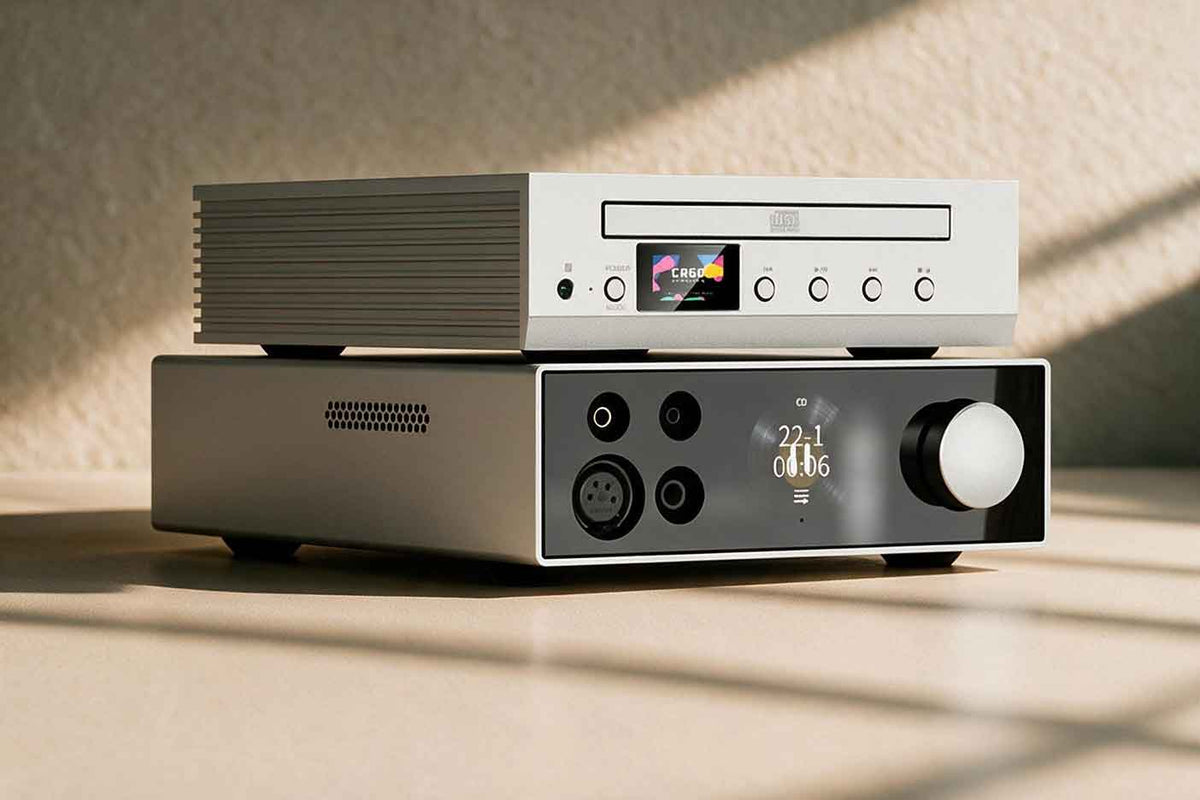
Shanling has become one of the first hi-fi specialists to publicly detail how the ongoing AI-driven memory shortage is affecting its business. In a statement posted to its official English-language site, the company said rising costs for processors, RAM and a range of other components are pushing its build costs up, and that this will show up in higher prices for products going forward. Coverage of the statement began circulating on 2 August 2026.
According to Shanling, the price effects will unfold in three ways. First, any new models the company introduces from August 2026 onward will carry higher MSRPs than they otherwise would have. Second, fresh production runs of existing products — batches expected to reach distributors during August and September 2026 — will also cost more, even for models already on the market. Third, and most notably, Shanling says some models may be discontinued outright rather than repriced, if rising costs make continued production unworkable at a price the company is willing to set.
Shanling named a specific chain of components behind the pressure. The company says processors and RAM were the initial trigger, with the squeeze then broadening to memory more generally, printed circuit boards, copper wiring, aluminium and other electronic parts. Asked whether prices would eventually return to previous levels, the company was blunt: "Honestly, we do not know."
What Shanling has not said
It's worth being precise about the limits of Shanling's statement. The company has not named which specific products will see price increases, has not given a percentage or dollar figure for any anticipated rise, and has not identified which models — if any — are candidates for discontinuation. Reporting on the story, including coverage from ecoustics.com, has pointed to the general product categories that sit in the exposed zone — portable players, CD players, network players, desktop DACs, headphone amplifiers and full-size disc players — citing models such as the M0 Pura, EC Play, EC Zero T MAX and SM90 as examples of what falls into those categories. That is reporter context about where Shanling's lineup sits, not a list published by Shanling itself, and none of those products have been confirmed by the company as facing a price change or discontinuation.
The one concrete price movement on the record predates the August statement: the M3 Plus was replaced by the M3 Plus Master Edition in March 2026, with the price moving from $469 to $559. Shanling's own statement doesn't explicitly tie that change to the same cost pressures it's now describing, but it stands as the only real-world example available of what a Shanling price adjustment in this environment has actually looked like.
The backdrop: a 15-year memory squeeze
Shanling's statement lands against a backdrop of unusually severe memory-market data. Contract-price figures reported for the second quarter of 2026 show DRAM prices up 58-63% quarter-over-quarter and NAND Flash contract prices up 70-75%, in what's been described as the most severe memory supply shortage in roughly 15 years, according to data reported via BigGo Finance.
The root cause, as reported, is that AI data centres are absorbing high-bandwidth memory and DDR5 supply at scale, prompting semiconductor makers to prioritise those contracts over consumer electronics — which restricts the general-purpose memory available for products like DAPs, network players and DACs. Independent reporting from CNBC and Bloomberg has tracked this pressure spreading across laptops, smartphones and other consumer electronics categories through 2026.
Samsung has warned that the global memory shortage could persist through 2028. That's the most solidly attested timeline in current reporting; other, longer estimates have circulated elsewhere but aren't attributed clearly enough here to repeat with confidence.
Shanling isn't acting alone
Shanling's statement follows price increases already taken by other consumer-electronics brands this year. FiiO raised US prices on 1 April 2026 across a range spanning the JM21, M21, M33 and DISC — products priced from $89.99 to $699.99. Outside audio, Roku increased streaming player prices by up to $50, according to the same reporting.
What sets Shanling's statement apart is the level of detail and the directness of the acknowledgment: rather than quietly adjusting price tags, the company has gone on record naming the components involved, setting a timeline, and explicitly floating discontinuation as one possible outcome. That combination — specificity plus candor about what it doesn't know — is unusual for a hi-fi manufacturer of Shanling's size, and it's why the statement is being read as a signal of how deep the AI-driven component squeeze has reached into the audio industry.
For now, the practical takeaway for shoppers is limited to what Shanling has actually confirmed: models introduced from August 2026 will cost more, existing products restocked in August and September will cost more, and some products may not survive the transition in their current form. Which products, and by how much, remains unspecified.
This article was written by an AI system from Into The HiFi AI Desk, generated from the following sources, with no human editing pass before publication: Shanling official statement, ecoustics.com, "Shanling Warns AI Boom Will Raise Hi-Fi Prices and Kill Some Products", CNBC, "Rise in memory chip costs puts pressure on retailers of laptops and smartphones", Bloomberg, "Why AI-Driven Memory Chip Shortage is Making Technology More Expensive", BigGo Finance, "Memory Chip Shortage Worst in 15 Years, Contract Prices Surge Up to 75% in Q2".



Leave a comment
This site is protected by hCaptcha and the hCaptcha Privacy Policy and Terms of Service apply.