


In short
A great system starts with the room, the people, and the listening ritual, not the spec sheet.
Long before I knew anything about the equipment, I remember the room.
I remember our family den, where I spent the years from about age three to eleven: walls covered in vertical wood paneling, my father's Klipsch La Scalas standing in the room like pieces of architecture, and the feeling that the stereo belonged there as naturally as the rest of us did. It wasn't a sealed-off listening chamber or a monument to one person's private obsession. It was our den. The whole family occupied it, and the music occupied it with us.
The Rolling Stones, Led Zeppelin, Jimmy Johnson, Eric Clapton—their records did not simply play in that room. They gave it an atmosphere. The music that emanated from the den felt sacred, even after I had been sent to bed. I can still hear Charlie Watts's drumsticks tapping so delicately at my bedroom door that it seemed as though he were standing on the other side.
What I remember most isn't what powered the speakers. I remember how the room changed when the music began: how the paneled walls, the furniture, and even the hallway between the den and my bedroom seemed to lean toward it. Long before I could use words like soundstage or imaging, I understood that sound could give a room a personality and give a family a shared memory.
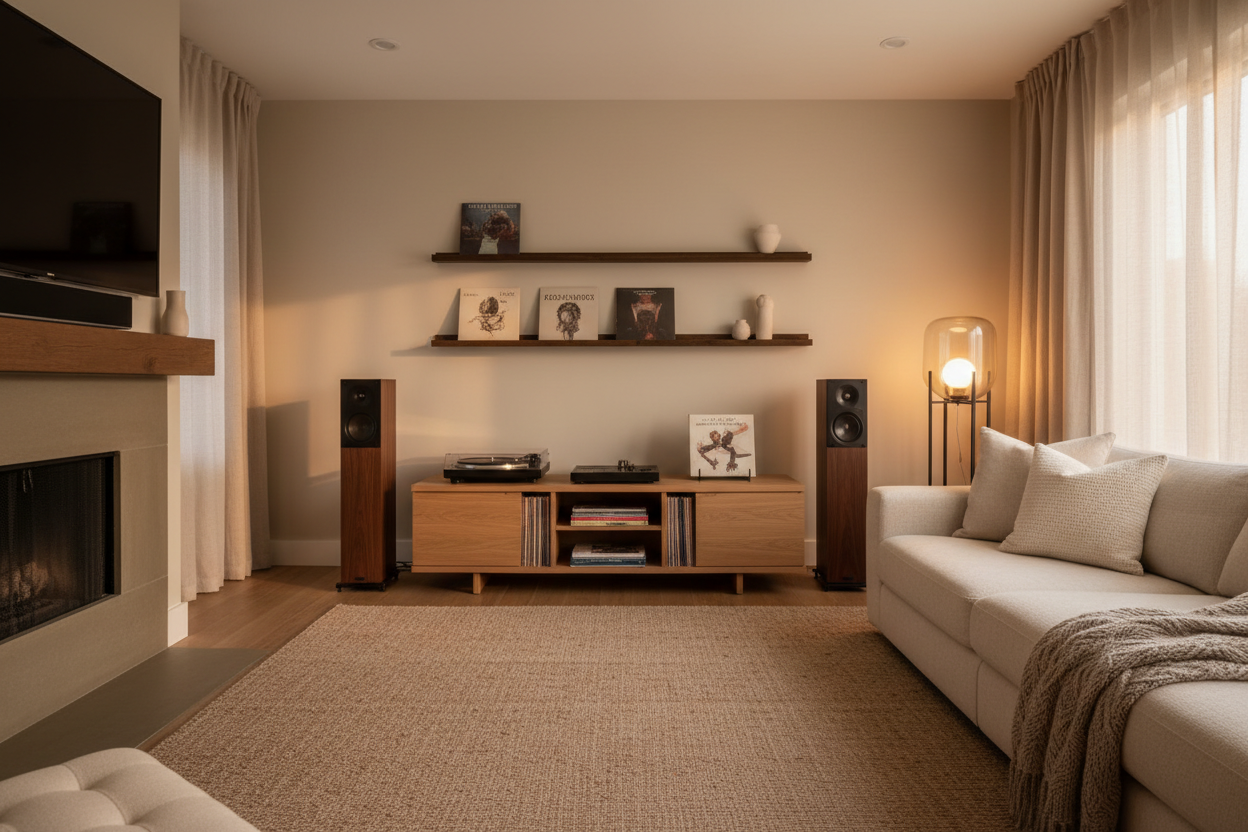
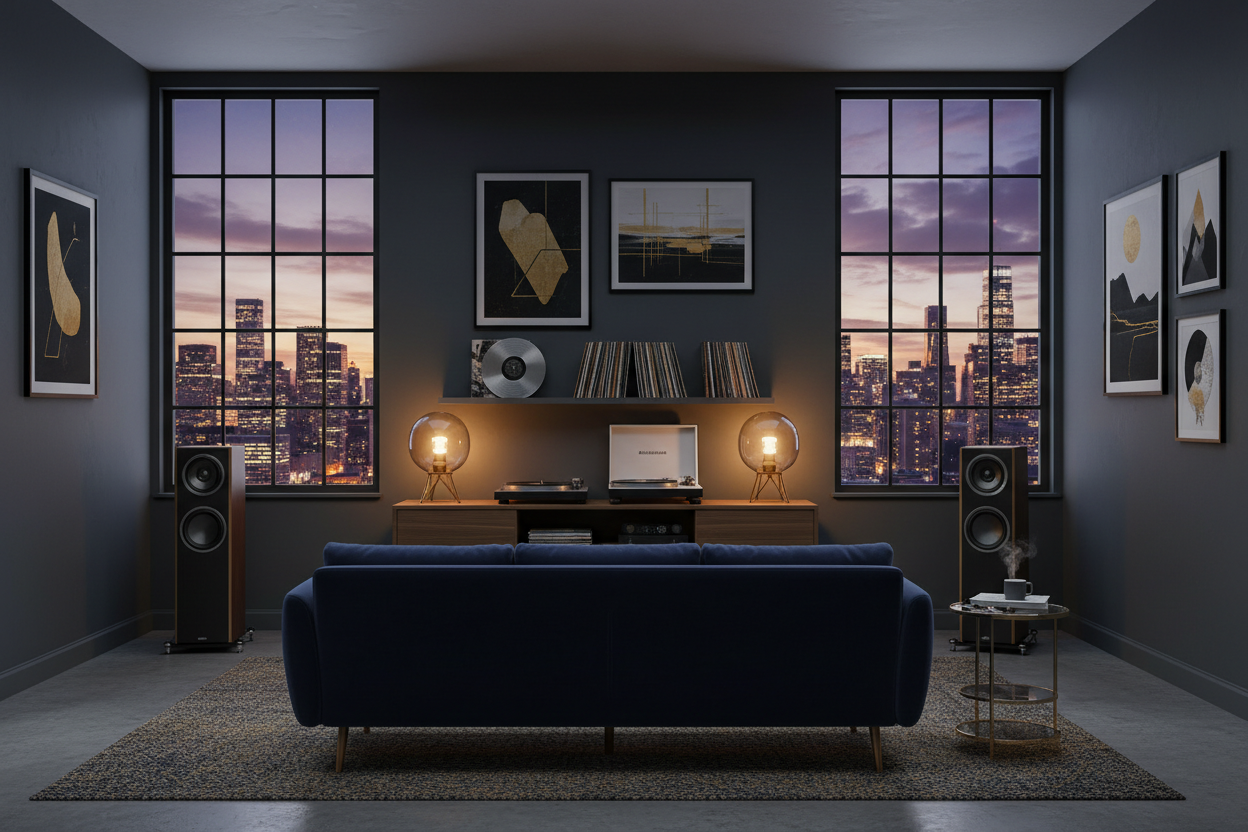
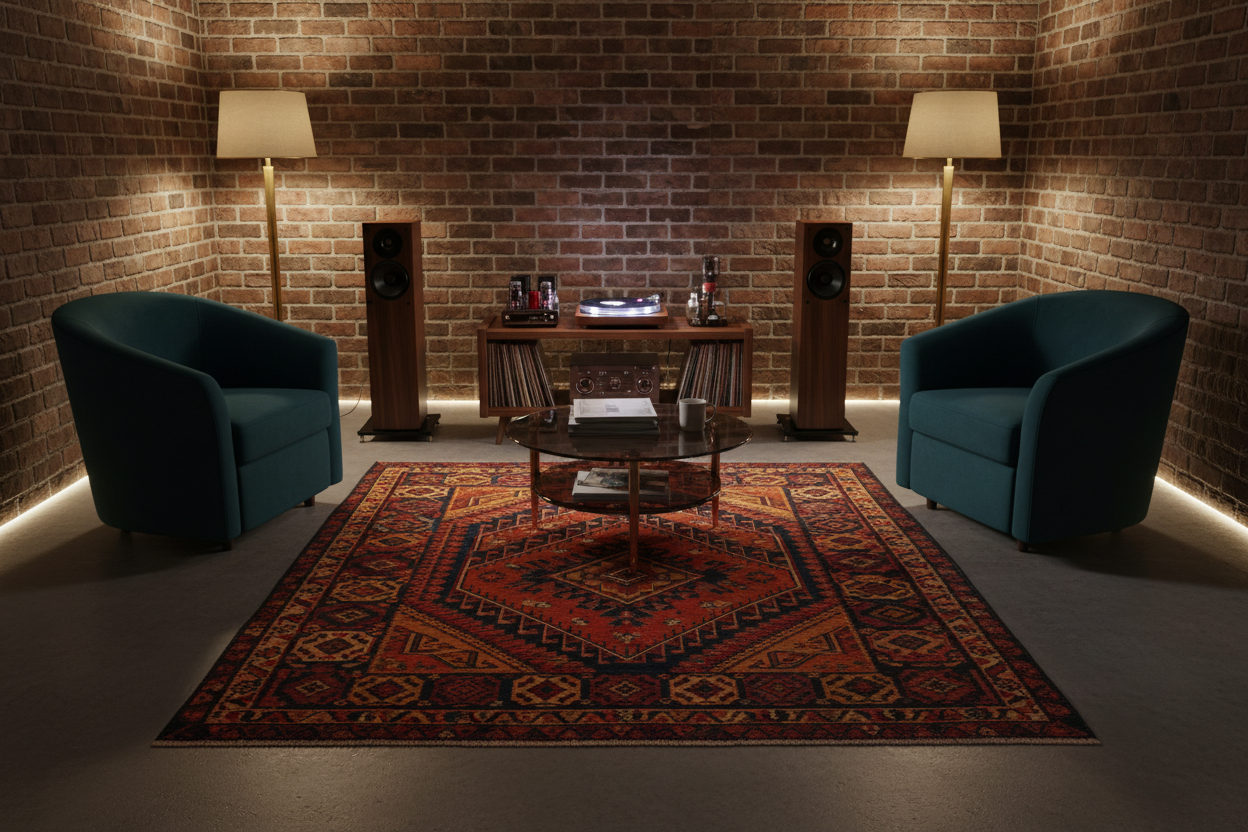
That's the thing nobody tells you when you start reading about hi-fi: the internet will teach you everything about drivers, damping factor, and burn-in, and anything about the room comes secondary. But the room is where you actually live. It's where someone chooses a record, where everyone finds a chair, and where an evening either settles into itself or doesn't. A system without a room is a spec sheet. A system in a room, the right room, shaped around the way you actually spend an evening, is something closer to a spiritual oasis.
Such a room is something you return to on purpose because the returning is most of the point. Choosing a record. Settling into a chair. Giving the music your full attention for the length of a side without doing anything else at the same time. It sounds almost old-fashioned to say that out loud in 2026. I think that's exactly why it matters.
My first real equipment memory is therefore not something I saved up to buy. It is those La Scalas, inseparable in my mind from that den. I knew nothing about horn-loaded speakers, sensitivity, amplification, or room placement. I only knew they could make a drummer seem close enough to touch my door.
After we moved away from that house, I watched my father's stereo continue to evolve while slowly losing its home. New components came and went. The system became part of a long-running family dance: welcomed into one room, banished to another, and eventually wearing out its welcome there, too. By my count, it has occupied at least ten rooms across three houses since the den.
Some of those rooms may have been more technically appropriate. Some may even have sounded better. But none came close to giving the system the same sense of belonging, and none recreated the communal feeling of a sound room that was genuinely shared by the whole family. The difference wasn't fidelity alone. It was the sense that the room, the music, the stereo, and the people all belonged to one another.
I have now spent much of my life as a transient, occupying houses and apartments in Vermont, Los Angeles, New York, Philadelphia, the mountains of western Virginia, Spain, and Israel. Each move has required rebuilding the routines of home: deciding where the furniture belongs, where the children will gather, and where the music will live.
Now that I have children of my own, I find myself longing to give them a den of their own, not an imitation of the room I grew up in, but a place where music can become part of the architecture of family life.
I never want the listening room to be a place of solitude by default. Solitude has its place, of course. When no one else is home, sitting down and listening can be its own form of escape. But the room itself should invite people in, at least that's how I see it for us. It should be a place where children play, adults talk, friends stay too late, and certain records become permanently attached to certain years of our lives.
Today, I have two stereos: one in my office and one in our garage. Some days I wonder whether I am an audiophile in quite the same way my father and my brother are, and, arguably, my mother, too. I care deeply about the quality of sound, but not only the presence of music. I care about the appearance of the components, the way the system sits within the room, the furniture around it, the light, and whether the space feels welcoming when the music begins.
Perhaps I am an audio-environmentphile: someone who cares as much about the life that gathers around a system as the system itself.
That is why I didn't build Into The HiFi because I thought the industry needed another place to sell speakers. I built it because so much of what I could find treated the room as an afterthought, a caption beneath a photograph of the gear rather than the subject of the photograph. I wanted to create a place that started with the room and worked outward:
What does this space ask of the music, and what does the music ask of the space?
That's the whole shape of what we're building here.
My Listening Room exists so you can think about your actual room—its dimensions, light, furniture, quiet hours, shared uses, and existing system—before you think about adding another component.
The Concierge exists because “What should I buy?” is almost always really a question about “How do I live?” That requires a conversation, not just a product page.
And the writers you'll find across this site: listeners, designers, dealers, shop owners, musicians, manufacturers, and people who simply care about how they listen to music, are here because the best answer to “What makes a good room for music?” has never come from one person. It comes from many rooms and many rituals, shared and compared honestly.
If you're here because you already have the ritual: a chair, a record, an hour you protect, I hope this feels like a place that takes it as seriously as you do.
And if you're here because you don't have it yet, I hope this feels like an invitation.
Leave a comment
This site is protected by hCaptcha and the hCaptcha Privacy Policy and Terms of Service apply.