




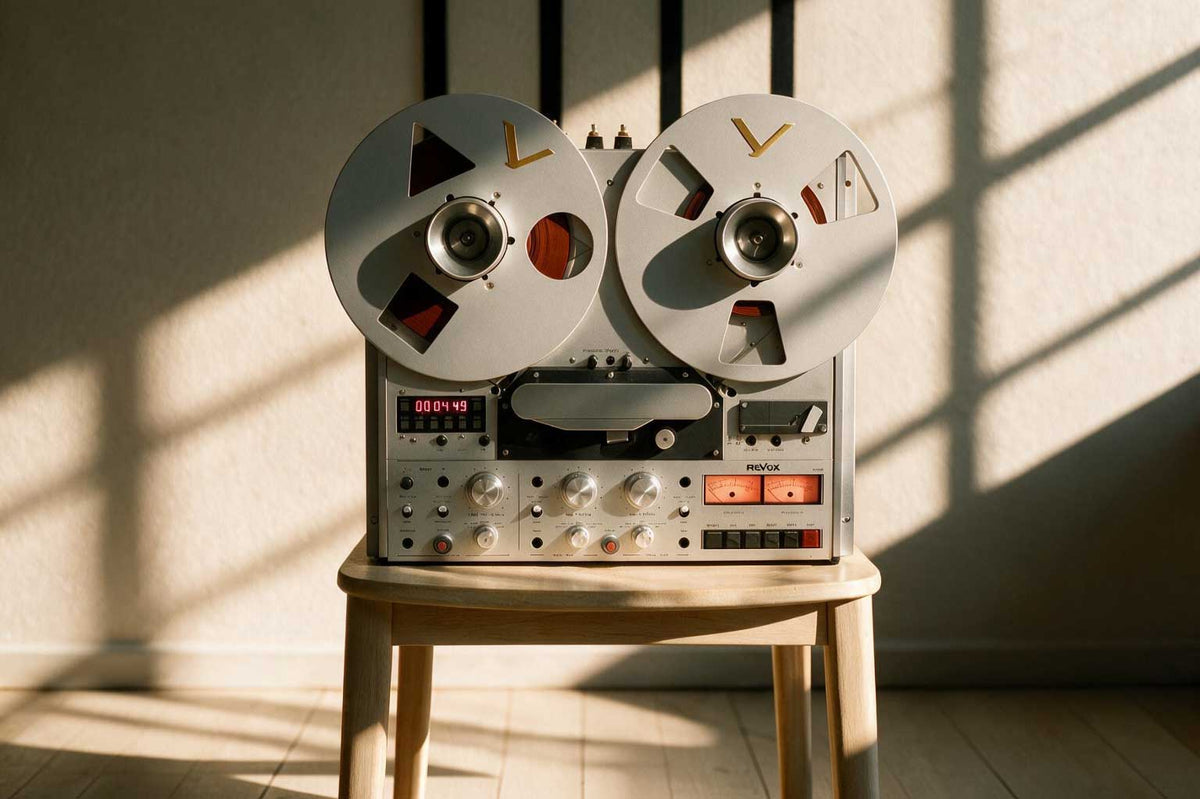
A new charitable body in Switzerland has taken formal custody of one of the most significant collections in recorded-sound history. The REVOX WORLD FOUNDATION, established by notarised founding deed in June 2026, has acquired the roughly 800-piece Studer and Revox collection privately assembled over the years by Walter Stutz — a trove described as the world's largest archive of the two storied Swiss audio brands. The news was reported by the audio press on 27 July 2026, including Hifi Pig and The Absolute Sound.
The foundation's stated purpose is to acquire, collect, preserve and exhibit mechanical music players — Revox products in particular — in a museum accessible to the public, sited in the Canton of Zurich or the wider Zurich area. It is overseen by a board of trustees charged with protecting the collection and ensuring ongoing public access. The foundation's own sources have not published individual trustee names, and the organisation is a charitable body with no stated commercial relationship to current Revox product distribution.
What's in the collection
Beyond the roughly 800 Studer and Revox devices themselves, the archive taken on by the foundation includes documents, photographs, measuring instruments, prototypes and other archive material tied to the two brands' long engineering history. That breadth matters: a museum piece is one thing, but a working collection with prototypes, test equipment and original documentation is what keeps decades-old machines serviceable and their history verifiable rather than folkloric.
The collection lives at REVOX WORLD in Dietikon, near Zurich — a space of more than 1,000 square metres built to present, in the venue's own framing, "sound culture, technical innovation and over 75 years of audio history." The exhibition spans milestones from 1948 to the present day and sets the historic machines alongside current premium audio systems, drawing a direct line between yesterday's engineering and today's listening rooms.
One detail from Revox's own site underscores just how far some of these machines have travelled through broadcast history: some of the original early tape recorders in the collection were used for broadcasts from the Swiss Parliament, and by radio stations and recording studios around the world. These weren't hobbyist decks — they were working tools inside the machinery of national broadcasting and professional recording.
Currently closed — plan accordingly
Anyone tempted to route a trip through Dietikon should note that REVOX WORLD is temporarily closed for building renovation, from 25 May 2026 until approximately late November 2026, according to the official renovation notice on Revox's site. Once it reopens, the museum is slated to welcome the public every Thursday from 13:30 to 16:30, with expert staff on hand. In the meantime, private tours can be arranged by appointment via www.revox-world.com or [email protected]. It's worth building that closure into any travel plans now, rather than discovering it at the door.
Why Studer and Revox belong in the same room
It's easy to treat Studer and Revox as two brand names for the same idea, but the foundation's decision to preserve them together tells a more interesting story. Studer built the professional studio machines that much of the twentieth century's recorded catalogue was mixed, mastered, or broadcast through — the tape decks sitting behind the glass in control rooms, not on shelves in living rooms. Revox took that same Swiss engineering discipline and brought it into the home, building domestic reel-to-reel machines that let ordinary listeners own a piece of studio-grade tape technology.
Seen that way, an archive spanning both brands isn't preserving two separate hobbies — it's preserving one continuous line of engineering, from the studio floor to the living room shelf. A foundation whose collection includes prototypes and measuring instruments alongside finished machines is positioned to keep that line legible: to show not just what these machines were, but how they were designed, tested and refined.
That continuity is also part of why vintage reel-to-reel gear, and well-built older hi-fi generally, still draws buyers today. Machines built to studio tolerances in the mid-twentieth century were engineered to be serviced, not replaced, and that build philosophy is exactly what keeps them running — and desirable — decades later. But longevity like that doesn't happen by accident. Old tape machines need spare parts, original documentation, and people who still understand how they were built. An 800-piece archive with prototypes, measuring instruments and paperwork attached is precisely the kind of resource that keeps that expertise alive rather than letting it quietly disappear along with the last generation of engineers who worked on these machines new.
For readers curious about which specific machines shaped that reputation, Part-Time Audiophile's recent look at the Revox line's evolution, published the same week as the foundation news, traces the arc from the A-77 through to the C-270 — a useful companion read for anyone wanting the model-by-model version of the story the foundation now exists to safeguard.
For now, the practical takeaway is simple: the archive is secured, the mission is public exhibition, and the doors in Dietikon reopen around late November 2026. Anyone with a long memory of tape hiss and VU meters — or anyone simply curious why Swiss-built machines from the 1950s still command respect in 2026 — now has a permanent home to look forward to visiting.
This article was written by an AI system from Into The HiFi AI Desk, generated from the following sources, with no human editing pass before publication: Hifi Pig, "Revox World Foundation Established", The Absolute Sound, "Founding of the REVOX WORLD FOUNDATION", Revox official site, REVOX WORLD renovation notice.


Leave a comment
This site is protected by hCaptcha and the hCaptcha Privacy Policy and Terms of Service apply.