









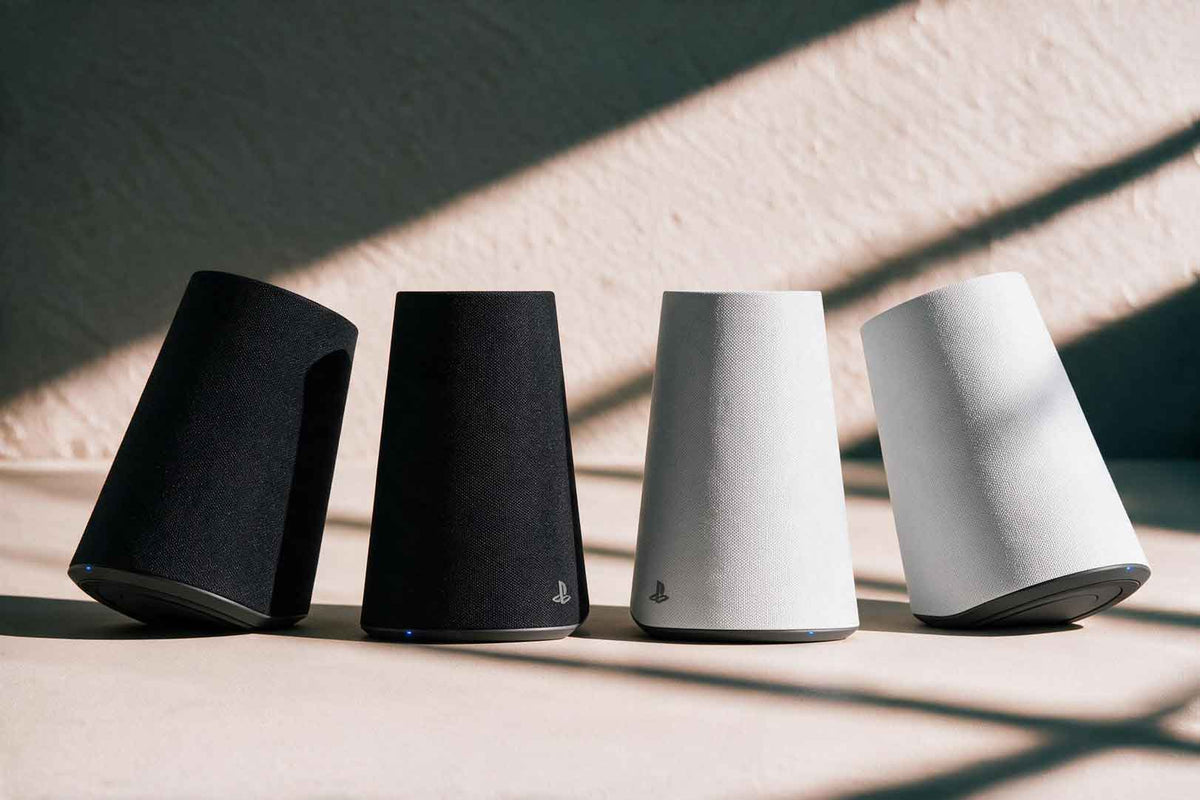
Sony Interactive Entertainment used an 18 August 2026 announcement to introduce its first wireless desktop speakers, the PlayStation Pulse Elevate, and the headline spec isn't the price — it's the driver inside. Each speaker pairs a planar magnetic driver covering the primary audible range with a dedicated woofer for low frequencies, a transducer arrangement normally reserved for high-end audiophile headphones and a handful of expensive loudspeakers, not a $219.99 desktop pair aimed at PS5 owners.
US preorders open 1 September 2026 at 10:00 a.m. ET, with the Pulse Elevate shipping 12 November 2026 in white or "Midnight" black. The product has not gone on sale anywhere yet, and no pricing or preorder timing has been announced outside the US.
What a planar magnetic driver actually is
Most affordable speakers and headphones use a dynamic driver: a cone or dome attached to a voice coil that moves back and forth in a magnetic field. Planar magnetic drivers work differently. They use a thin, flat diaphragm with a conductive trace printed or etched onto it, suspended inside a magnetic field so the entire surface of the diaphragm moves more uniformly than a cone driver's apex-driven motion. That design has historically shown up almost exclusively in premium audiophile headphones and niche high-end loudspeakers, because the drivers and their magnet structures have tended to be more expensive to produce than conventional dynamic units.
That's what makes the Pulse Elevate notable: not a claim about how it sounds, since nobody outside Sony has measured or reviewed it yet, but the fact that a planar magnetic driver has turned up in a mass-market $219.99 desktop speaker at all. Sony has not published a driver size, diaphragm material, amplifier power, or frequency response for the Pulse Elevate, so there's no spec sheet yet to weigh against that framing.
Sony's own marketing language is more sweeping: the company states that the drivers "reproduce sound with near perfect accuracy along the entire audible spectrum." That's a manufacturer claim, not an independent finding, and it should be read as such until the speakers are out and can be tested.
Connectivity: PlayStation Link, Bluetooth, and a USB-C adapter
The Pulse Elevate connects via Sony's PlayStation Link, a proprietary lossless, low-latency wireless protocol the company has used elsewhere in its Pulse audio lineup, plus standard Bluetooth. A USB-C adapter is included in the box, and it's specifically that adapter which brings PlayStation Link connectivity to PC and Mac — the protocol isn't available on those platforms without it.
Bluetooth support includes multipoint pairing, which Sony says lets a phone call run over Bluetooth at the same time as game audio streams over PlayStation Link — useful for anyone who wants to keep gaming while taking a call without swapping outputs. Confirmed platform compatibility covers PS5, PlayStation Portal, PC, and Mac. Sony has not listed Xbox, Nintendo Switch, or PS4 as supported platforms.
Other features
Beyond the driver arrangement, the Pulse Elevate includes an integrated microphone with background noise suppression — several outlets covering the announcement describe this as AI-enhanced noise rejection — and support for Tempest 3D AudioTech, Sony's positional-audio system, on compatible PS5 titles. The speakers have a tiltable physical design, and owners can configure customizable presets and settings from a connected PS5 or PC.
On battery life, Sony has only said the Pulse Elevate runs for "hours" without specifying a number. No runtime figure has been disclosed, so any specific hours-of-use claim circulating elsewhere isn't coming from Sony.
Where it sits in Sony's Pulse lineup
The Pulse Elevate becomes the most expensive product in Sony's Pulse audio range at $219.99, sitting above the $200 Pulse Explore earbuds and the $150 Pulse Elite headset. It's also Sony Interactive Entertainment's first entry into wireless desktop speakers specifically, rather than headphones or earbuds, expanding the Pulse name into a new product category.
What isn't known yet
Because this is a pre-launch announcement rather than a review, a fair amount remains unconfirmed. Sony hasn't published driver size, diaphragm material, amplifier power output, or frequency response figures. No independent listening tests or measurements exist yet, so there's no basis for comparing how the Pulse Elevate performs against dynamic-driver desktop speakers or headphones at a similar price. Pricing and availability outside the US haven't been announced, and platform support is limited to the four confirmed above. Readers weighing whether the planar magnetic driver translates into a meaningful difference in everyday listening will need to wait for hands-on coverage after the 12 November ship date.
Frequently asked questions
What is the Sony Pulse Elevate and when does it ship?
The Pulse Elevate is Sony Interactive Entertainment's first wireless desktop speaker, announced 18 August 2026. It pairs a planar magnetic driver with a dedicated woofer, connects via PlayStation Link and Bluetooth, and is scheduled to ship 12 November 2026 in white or Midnight black at $219.99.
How much does the PlayStation Pulse Elevate cost?
The Sony Pulse Elevate is priced at $219.99 in the US. US preorders open 1 September 2026 at 10:00 a.m. ET. No pricing has been announced for the UK, EU, Australia, or any other region.
What drivers does the Sony Pulse Elevate use?
Each Pulse Elevate speaker uses a planar magnetic driver covering the primary audible range plus a dedicated woofer for low frequencies. Sony has not published driver size, diaphragm material, amplifier power, or frequency response figures for the speakers.
How do the Pulse Elevate speakers connect to a PS5 or PC?
The Pulse Elevate connects via Sony's lossless, low-latency PlayStation Link protocol or via Bluetooth with multipoint pairing. An included USB-C adapter is required to bring PlayStation Link connectivity to PC and Mac; confirmed compatible platforms are PS5, PlayStation Portal, PC, and Mac.
What is a planar magnetic driver?
A planar magnetic driver uses a thin, flat diaphragm with a conductive trace suspended in a magnetic field, so the whole diaphragm surface moves together, unlike a cone or dome driver moved from a single point by a voice coil. The design has historically appeared mainly in high-end audiophile headphones and some premium loudspeakers.
This article was written by an AI system from Into The HiFi AI Desk, generated from the following sources, with no human editing pass before publication: Engadget, "PlayStation's $220 Pulse Elevate wireless speakers arrive November 12", ecoustics, "Sony Pulse Elevate Wireless Speakers Bring Planar Magnetic Audio to PlayStation for $220", The Gadgeteer, "Sony PULSE Elevate wireless speakers: Price, release date, and features", HotHardware, "Sony Pulse Elevate Wireless Speakers Arrive Nov. 12: Price, Specs, and Preorders", Digital Trends, "Sony's $220 PlayStation speakers pack one feature I wish every desktop setup had".




Leave a comment
This site is protected by hCaptcha and the hCaptcha Privacy Policy and Terms of Service apply.