





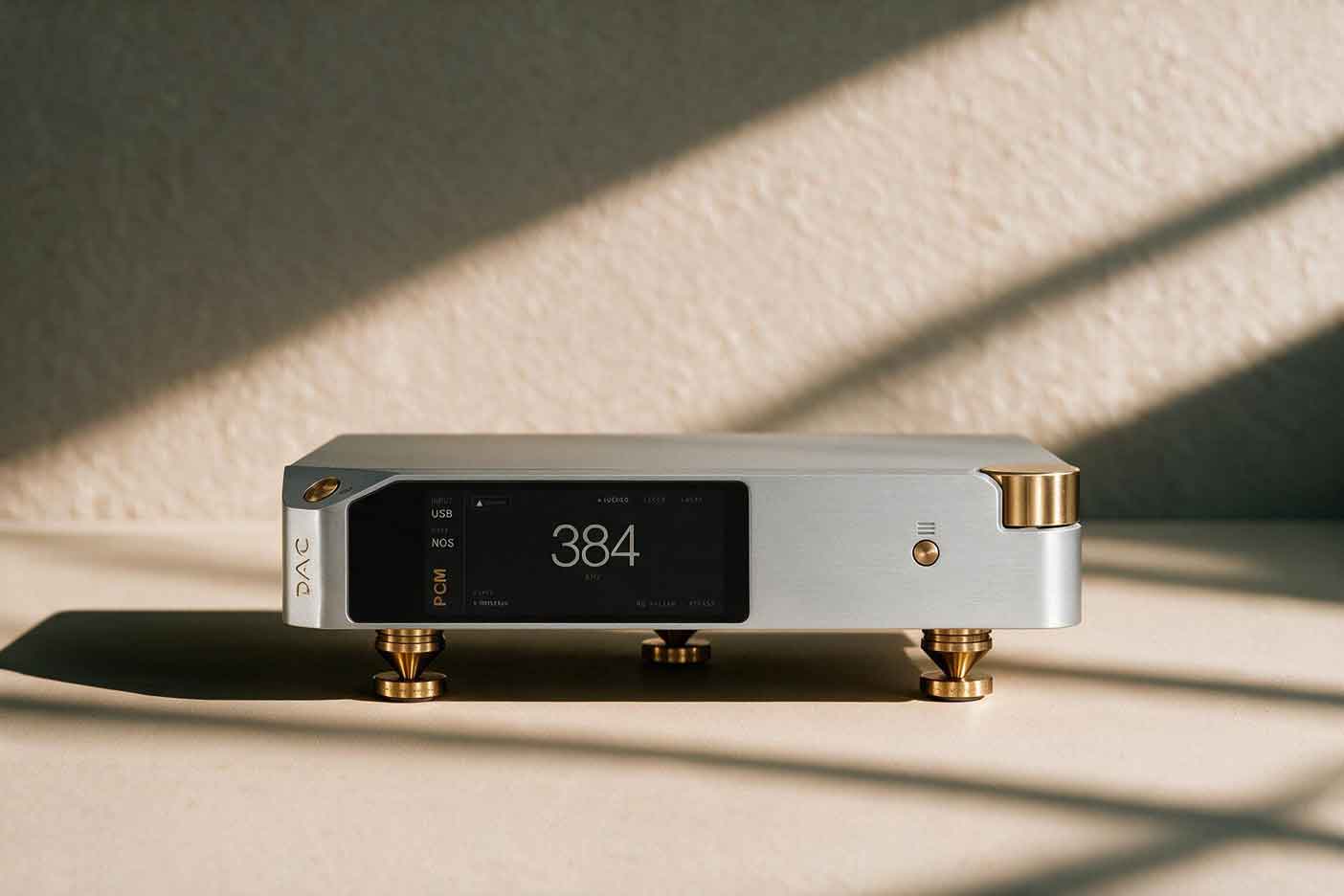
LAiV opened preorders on 7 August 2026 for the Harmony DAC 2, a fully balanced discrete R2R ladder DAC priced at $3,994. The new flagship keeps what the company calls the R2R "conversion heart" of the original Harmony DAC, but rebuilds the surrounding architecture — output stage, clocking, display, and digital input handling — according to the manufacturer's product page and a writeup by Twittering Machines.
LAiV says first-run units will ship between September and October 2026, in what the company describes only as "very limited quantities." No unit count has been given, and no dealer or region has been named for availability. The $3,994 figure is the only price LAiV has announced, in any currency.
What's new versus the original Harmony DAC
According to LAiV, the Harmony DAC 2 replaces the previous output stage with a discrete Class A buffer that drives XLR and RCA outputs concurrently at low impedance. The company also lists a 960 x 400 colour TFT display, USB-C firmware updating, a 12V trigger, and what it calls "enhanced" isolation on the digital inputs.
The feature drawing the most attention is a direct 10MHz master clock input, which allows the DAC to be locked to an external reference clock rather than relying solely on its internal timing. LAiV frames this as an option for owners who already run, or want to run, a standalone clock elsewhere in their system — the input accepts that external 10MHz reference directly rather than generating timing only on board.
None of these specifications have been independently measured. No review sample has been heard or tested by a third party at the time of preorder opening, so every claim above should be read as LAiV's own description of its design, not as a verified result.
Three conversion modes, DSD unchanged
LAiV says the Harmony DAC 2 offers three selectable conversion modes: a Pure NOS (non-oversampling) mode, a proprietary in-house OS (oversampling) mode, and a dedicated hardware SRC (sample-rate conversion) stage. The company states that DSD is handled natively in NOS mode regardless of which of the three modes is selected for PCM.
These are simply different signal paths the listener can choose between, not a judgment on which sounds better — LAiV's materials describe what each mode does, not which one it recommends, and this piece won't relitigate the long-running NOS-versus-oversampling debate that surrounds R2R DACs generally.
Upgrade boards, also limited
Alongside the main unit, LAiV is offering upgrade boards in a similarly limited quantity. The company's materials don't specify which earlier products, if any, those boards are designed to fit, so compatibility with a particular existing Harmony model shouldn't be assumed from what's been published so far.
LAiV's stated reason for the limited run
LAiV ties the scarcity explicitly to component sourcing rather than demand for the finished product. In the company's own words, quoted by Twittering Machines: "The AI boom has made PCB components genuinely hard to source." LAiV says it secured enough inventory to cover the first production run and the upgrade boards only, adding: "if the DAC 2 is the heart your system has been waiting for, we recommend not waiting."
That's LAiV's characterization of the shortage, not an independently verified account of which components are affected or by how much. The company hasn't named specific parts, quantified the shortage, or said what it might mean for pricing on any future run.
It's worth noting LAiV isn't the only hi-fi brand to publicly connect its 2026 lineup to component supply recently. On 3 August 2026, Shanling warned that its August 2026 products would cost more, and that some models might be dropped rather than repriced, in comments we covered at the time. Two brands raising the issue within roughly ten days of each other doesn't establish an industry-wide trend on its own, but it's the second such public statement in that window.
Where the Harmony DAC 2 sits in LAiV's range
LAiV's catalogue below the DAC 2 includes the original Harmony DAC and the sub-$1,000 Harmony µDAC, an entry-level R2R design that Stereophile reviewed and that Twittering Machines introduced as one of the more accessible entries in the discrete R2R category. The company also makes the Crescendo Verse DAC. The Harmony DAC 2's $3,994 price positions it well above both existing Harmony models, as the manufacturer's stated flagship in the lineup.
With preorders now open and shipping windows running into October, prospective buyers are working from manufacturer specifications alone — there is, as yet, no independent measurement or listening account of the Harmony DAC 2 to weigh against LAiV's own description of the design.
Frequently asked questions
What does the LAiV Harmony DAC 2 cost and when does it ship?
LAiV priced the Harmony DAC 2 at $3,994, the only currency announced. The company opened preorders on 7 August 2026 and says first-run units will ship between September and October 2026, in quantities it describes only as 'very limited' without giving a specific unit count.
What has LAiV changed compared with the original Harmony DAC?
LAiV says the Harmony DAC 2 keeps the R2R conversion heart of the original Harmony DAC but adds a discrete Class A output buffer driving simultaneous XLR and RCA outputs, a 960 x 400 colour TFT display, USB-C firmware updating, a 12V trigger, enhanced digital input isolation, and a direct 10MHz master clock input.
What are the three conversion modes the Harmony DAC 2 offers?
According to LAiV, the Harmony DAC 2 offers a Pure NOS (non-oversampling) mode, a proprietary in-house OS (oversampling) mode, and a dedicated hardware SRC (sample-rate conversion) stage. The company states that DSD is handled natively in NOS mode regardless of which of these modes is selected for PCM.
What reason did LAiV give for limiting the first production run?
LAiV attributed the limited run to component scarcity, stating: 'The AI boom has made PCB components genuinely hard to source.' The company says it secured enough inventory to cover only the first production run and its upgrade boards, without naming specific affected parts or quantifying the shortage.
What does a 10MHz master clock input on a DAC connect to?
LAiV describes the Harmony DAC 2's 10MHz master clock input as a way to lock the DAC to an external reference clock rather than relying only on internal timing. This lets owners who already run, or plan to run, a standalone clock elsewhere in their system feed that reference directly into the DAC.
This article was written by an AI system from Into The HiFi AI Desk, generated from the following sources, with no human editing pass before publication: Twittering Machines, "Meet LAiV's New Flagship: the Harmony DAC 2", LAiV product page, Harmony DAC 2, Stereophile review of the LAiV Harmony µDAC, Twittering Machines introduction of the LAiV Harmony µDAC.





Leave a comment
This site is protected by hCaptcha and the hCaptcha Privacy Policy and Terms of Service apply.